API Exploitation: The Emerging Threat Behind Recent Data Leaks in Japan’s Enterprises
What Happened
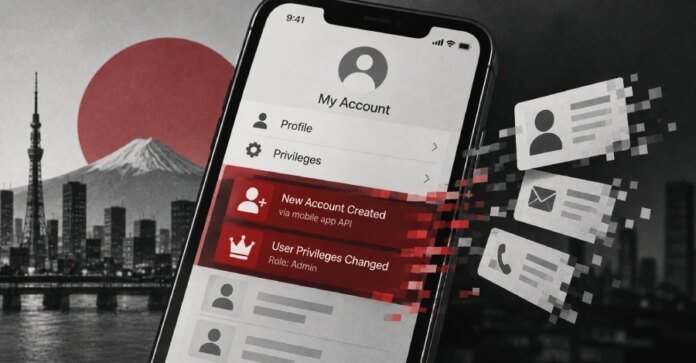
Recently, the JPCERT Coordination Center (JPCERT/CC) issued an alert regarding a series of data breaches affecting several unnamed Japanese organizations. Confirmed reports indicate that attackers exploited vulnerabilities in application programming interfaces (APIs) associated with mobile applications, coupled with known software flaws. Although the exact timeline remains unclear, the organizations have experienced notable leaks of personal data, sparking significant concerns throughout Japan’s corporate and governmental sectors. As of now, the specifics regarding the types of data compromised or the number of impacted individuals remain largely undisclosed, leaving organizations to assess their risk exposure based solely on the alert issued in early October 2026.
Why This Breach Matters
The implications of this series of breaches extend beyond the individual organizations, indicating a worrying trend in cybercriminal tactics that leverage API vulnerabilities. APIs have increasingly become a focal point for attackers, capitalizing on their vast integrations within digital ecosystems and the often insufficient security measures that accompany them. This breach is likely part of a broader cyber campaign that preys on technological dependencies, such as software flaws and unsecured APIs, which other sectors should heed. Compared to recent incidents, such as those seen involving large retailers or service providers, this wave of breaches signifies a shift in focus towards smaller firms that may not have the same level of security maturity, presenting an evolving threat landscape for many enterprises.
The Attack Chain: How It Likely Unfolded
While details of the specific attack chain remain sparse, we can infer a likely progression based on common methodologies employed by cybercriminals. Initial access may have been gained through weak API endpoints, exploiting flaws in the application layer that could have allowed for unauthorized data manipulation. Once inside, attackers likely moved laterally through the organizations’ networks, seeking out sensitive personal data and system credentials stored in databases connected to the exploited applications. Data exfiltration could have occurred via standard protocols, such as HTTP requests, embedding the stolen data into API responses or transferring them to external servers under the attackers’ control. If typical breach timelines are considered, the dwell time could have ranged from weeks to months, allowing for prolonged exposure before detection.
Who Is Most at Risk
Organizations within sectors such as finance, healthcare, and any entity managing personal data can expect to be particularly vulnerable to this breach type. Enterprises using mobile applications to interact with customers or clients are at an increased risk due to the reliance on APIs for transactions and personal data exchanges. Medium to large-sized corporations with inadequate API security measures—or those that utilize third-party applications without rigorous vetting—should be alarmed by this incident. Additionally, companies containing sensitive data repositories or those integrating legacy software systems may find themselves especially susceptible to similar exploitation methods.
Defensive Actions and Recommendations
Security teams must promptly assess their current API security posture in light of this breach. Here is a prioritized action plan:
Immediate (24–72 hours):
- Conduct an API Security Audit: Review endpoint security, focusing on authentication mechanisms, data validation processes, and session management.
- Patch Known Vulnerabilities: Ensure all software, especially that which interacts with APIs, is up-to-date with the latest patches addressing known flaws.
- Log and Monitor API Activity: Increase logging on all API endpoints to identify abnormal patterns indicating abuse or potential breaches.
Short-Term (1–30 days):
- Implement Rate Limiting & Throttling: Protect against abuse of services through rate limiting to minimize potential data scraping or brute-force attacks.
- Enhance Authentication and Encryption: Employ robust user authentication protocols for API access, such as OAuth, and utilize transport layer security (TLS) for data in transit.
- Run Penetration Tests: Engage security experts to simulate attacks on APIs to proactively identify vulnerabilities before real attackers do.
Long-Term (30 days and beyond):
- Adopt an API Security Framework: Integrate frameworks such as the NIST Cybersecurity Framework or the OWASP API Security Top 10 into security policies to continuously assess and mitigate API risks.
- Develop Incident Response Plans: Ensure organizations have dedicated playbooks that outline actions in the event of an API compromise.
- Employee Training: Regularly conduct training sessions focused on security awareness and secure coding practices for developers to mitigate risks from the software development lifecycle.
Regulatory and Legal Exposure
The exposed data and its implications can lead to significant legal and regulatory repercussions. Depending on the data type that has leaked, organizations may face obligations under laws like GDPR or CCPA, which require timely notifications to affected individuals and broader regulatory bodies. Non-compliance can result in substantial fines and legal scrutiny, accentuating the necessity for organizations to not only focus on data security but also maintain detailed records and communication plans concerning potential incidents.
Full Circle Cyber Analyst Takeaway
This incident serves as a critical reminder that APIs are a double-edged sword, essential for business efficiency but increasingly weaponized by attackers when inadequately secured. Organizations must prioritize API security and bolster defenses at all phases of application development and deployment. Neglecting this can turn valuable digital infrastructure into vulnerable attack vectors.

