Compromised TLDs: A New Threat Landscape for Online Security
What Happened
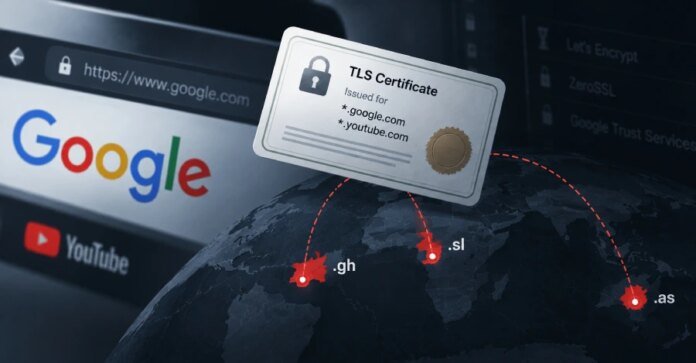
On October 6, Google disclosed that attackers had gained unauthorized access to three country-code top-level domains (ccTLDs) — specifically, .gh (Ghana), .sl (Sierra Leone), and .as (American Samoa). This breach has significant implications for domains ending in these identifiers, as attackers obtained counterfeit HTTPS certificates that could be used to impersonate legitimate Google services. Although Google confirmed that their internal systems remained unaffected, the breach effectively undermines trust in these ccTLDs, exposing users to man-in-the-middle attacks where adversaries can simulate genuine Google sites under the guise of encryption. The breach highlights a growing security challenge as state and non-state actors evolve to exploit weaker points in the domain name system (DNS), thereby turning a trusted internet infrastructure into a vehicle for deception and potential data theft.
Why This Breach Matters
This incident represents a concerning trend in the landscape of cyber threats, particularly, the hijacking of ccTLDs for malicious purposes. The attackers’ ability to obtain HTTPS certificates suggests advanced knowledge of certificate authorities and their verification processes. This attack may signal a shift towards targeting TLDs and leveraging them as vectors for impersonation and phishing, which can lead to widespread credential theft and data exfiltration. Compared to previous breaches where entire databases are compromised, this incident stands out as a testament to how attackers are innovating to exploit systemic vulnerabilities by bypassing direct hacks of major corporations. Cybersecurity teams must question their reliance solely on traditional perimeter defenses and start treating the integrity of domain registrars and certificate authorities as critical components of their security posture.
The Attack Chain: How It Likely Unfolded
While specifics regarding the initial access vector remain undisclosed, an analysis suggests a likely scenario involving social engineering or sophisticated manipulation of DNS configurations. First, attackers likely gained access to registrar systems for the targeted ccTLDs through either credential harvesting or exploiting configuration vulnerabilities. This initial access would have allowed them to request fraudulent HTTPS certificates from legitimate certificate authorities, often using domain validation techniques that are typically trusted by these entities. Once they secured these certificates, attackers could efficiently execute phishing campaigns that masquerade as authentic Google services, allowing for seamless lateral movement into end-user systems. The dwell time for this type of attack would be minimized; however, the ramifications for users exposed to such impersonations could be long-lasting, potentially leading to data compromise and further exploitation.
Who Is Most at Risk
Industries heavily relying on online identity and authentication mechanisms are particularly vulnerable to this type of breach. Financial services, healthcare organizations, and e-commerce platforms are prime targets due to their reliance on online transactions and user trust. Organizations using .gh, .sl, or .as domains, especially smaller firms or those lacking robust DNS management practices, are at immediate risk. Additionally, users accessing sensitive information through these domains could be exposed to credential theft, enabling attackers to gain footholds into their networks. As such, the risk is not restricted to a single sector but widely distributed among any organization that interacts with these ccTLDs.
Defensive Actions and Recommendations
In response to this breach, security teams should take immediate and long-term actions to safeguard their environments against similar incidents. Within the first 24-72 hours, organizations should:
- Review Domain Security Practices: Ensure that only authorized personnel can manage domain records and that multi-factor authentication is enabled for registrar accounts.
- Monitor Certificates: Utilize certificate transparency logs to track any unauthorized certificates issued for your domains, which can provide early warning signs of compromise.
Over the longer term, organizations should consider the following strategic measures:
- Implement DNSSEC: Deploy Domain Name System Security Extensions (DNSSEC) to provide a higher level of integrity and authenticity for domain queries.
- Conduct Regular Audits: Schedule annual or semi-annual audits of domain registrars and certificate authorities to assess their security practices and confirm that your domains are secure.
- Education and Awareness: Train employees on recognizing phishing attempts, especially those that may originate from newly created or spoofed domains.
Using frameworks such as NIST and CIS can help structure these security practices effectively and mitigate risks associated with domain-level threats.
Regulatory and Legal Exposure
Organizations impacted by this breach must also consider the regulatory implications tied to data privacy and protection laws like GDPR, CCPA, and others applicable in their jurisdictions. If the impersonation leads to data breaches or unauthorized access to consumer data, the affected organization could face severe fines, legal action, and the obligation to notify affected parties. Legal exposure depends largely on how sensitive the impersonated data may be and the specific requirements of each regulatory framework. Organizations must ensure they are prepared to meet these obligations promptly.
Full Circle Cyber Analyst Takeaway
The key lesson from this incident is the urgent need for organizations to fortify their domain management processes and adopt a zero-trust mindset. The integrity of online identities has become a critical defense line, and attacking these can bypass standard cybersecurity controls. Prioritizing domain security and certificate management can significantly strengthen defenses against the evolving threat landscape.

