Dark Web Discovery Reveals State Bank of India Data Breach: What You Need to Know
What Happened
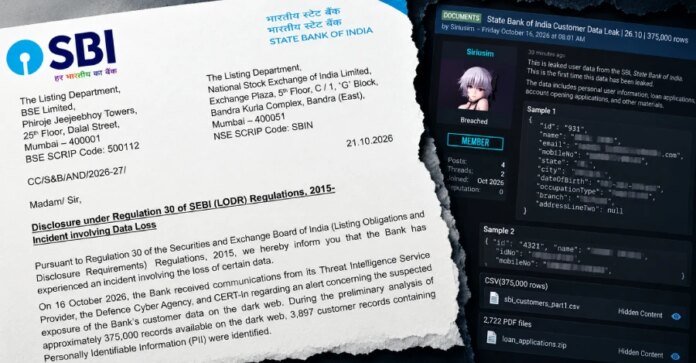
The State Bank of India (SBI), the country’s largest state-owned bank, recently announced a significant data breach impacting approximately 3,897 customer records. This data was discovered among around 375,000 records listed on the dark web, raising concerns regarding the source and method of compromise. While SBI’s stock exchange filing dated October 21 confirmed the incident, it notably lacked details on how the breach occurred or the specific types of data accessed. Internal investigations are still ongoing, and it remains unclear whether the exposed data includes sensitive information such as financial details, identification numbers, or account passwords. With the financial sector already under scrutiny from increasing cyber threats, the urgency for clarity and proactive response is paramount.
Why This Breach Matters
This breach underscores a concerning trend in the financial sector where even the largest institutions are vulnerable to data exposure. The very nature of financial records invites a diverse range of threat actors—ranging from financial fraudsters to sophisticated organized cybercriminals. Given the scale of the breach within a substantial institution, it could signify part of a broader threat landscape impacting banks in India and globally. Comparatively, this incident may align with recent events where major financial institutions have faced similar challenges, indicating an emerging pattern of exploiting weak links in data protection. For security teams, the incident serves as a wake-up call to re-evaluate existing defenses and ensure comprehensive monitoring of sensitive data.
The Attack Chain: How It Likely Unfolded
While specific details of the attack vector are not disclosed, several possible scenarios can be inferred. Initial access could have been obtained through common attack vectors such as phishing attacks targeting employees or exploiting vulnerabilities in third-party systems linked to SBI. Once inside the system, attackers could have performed lateral movement using compromised credentials, a common tactic in breaches of this magnitude. Data exfiltration might have involved bundled records sent to external servers or cloud storage, allowing easy access via the dark web. The dwell time, while unexplored in SBI’s current communications, can significantly impact data exposure; previous breaches in the banking sector have seen dwell times ranging from a few days to several months before detection.
Who Is Most at Risk
Financial institutions, especially large banks that handle vast amounts of personal and financial data, are at high risk from breaches like SBI’s. Organizations with less mature security postures, those lacking in incident response plans, or with limited visibility into their networks face significant exposure. Additionally, banks leveraging outdated legacy systems without robust security controls could unknowingly facilitate such breaches, making them prime targets for cybercriminal activities. The same vulnerabilities can also impact fintech startups seeking to innovate in digital banking, as they sometimes lack the resources for comprehensive security measures.
Defensive Actions and Recommendations
In response to this breach, security teams should begin by implementing immediate actions. First, conduct a thorough risk assessment to understand the scope of potential vulnerabilities within your systems. Following this, enhance monitoring tools to detect unusual access patterns and potential data exfiltration activities, utilizing an effective Security Information and Event Management (SIEM) system. Specific frameworks like the NIST Cybersecurity Framework can guide these efforts, including steps like performing regular vulnerability assessments and ensuring that systems are up-to-date.
For long-term strategic initiatives, organizations must invest in employee training aimed specifically at recognizing phishing attempts and social engineering tactics. Additionally, enforcing multi-factor authentication (MFA) across all access points can significantly reduce risk. Implement data encryption policies to protect sensitive information, both at rest and in transit, adhering to standards set out in CIS Controls, which emphasize data protection as a critical control area.
Finally, organizations should regularly review and update their incident response plans to ensure they are prepared for potential data breaches and can react swiftly should a vulnerability be exploited.
Regulatory and Legal Exposure
The breach at SBI raises immediate concerns regarding compliance with various regulatory mandates, including the General Data Protection Regulation (GDPR) and sector-specific regulations in India. With the exposure of sensitive personal and financial data, the bank could be obliged to report the incident to data protection authorities and potentially inform affected customers. Non-compliance with data protection laws could result in significant fines and reputational damage. Additionally, depending on the nature of the data leaked, SBI may face increased scrutiny from the Reserve Bank of India, further complicating its recovery and remediation efforts.
Full Circle Cyber Analyst Takeaway
Security teams must prioritize data visibility and integrity in a landscape marked by evolving cyber threats. The SBI breach highlights the necessity for a proactive, layered security approach and robust incident response strategies that adapt to emerging risks. Practitioners should treat breaches not just as isolated incidents, but as indicative of broader vulnerabilities that demand comprehensive, strategic action.

