Compromised Certificate Keys Raise Alarms for Cybersecurity Standards—A Wake-Up Call for Certificate Authorities
What Happened
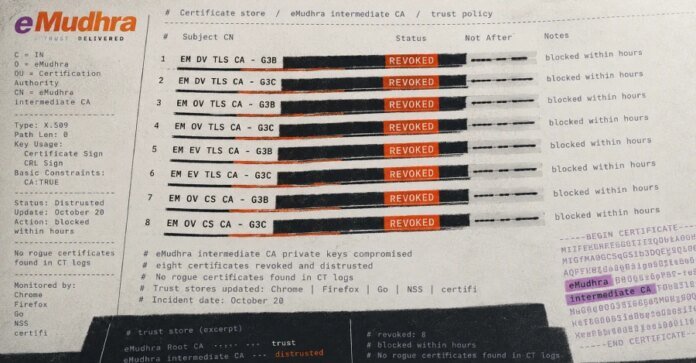
On October 20, Mozilla and Google confirmed the compromise of eight private keys from eMudhra, an intermediate certificate authority (CA) responsible for signing website certificates. The breach enables any entity possessing these keys to issue fraudulent certificates for any domain recognized by popular web browsers. This incident marks a critical vulnerability not only for eMudhra but also for the integrity of digital communications worldwide. Initial reports indicate that the exposure of these private keys facilitates potential man-in-the-middle (MitM) attacks, greatly undermining trust in web certificates. As the incident unfolds, further investigations will focus on the extent of the breach, precise methods of compromise, and potential links to broader attack campaigns.
Why This Breach Matters
The compromise of CA private keys signifies a fundamental breach of trust in the digital ecosystem. CAs are pivotal in maintaining secure communications through the issuance of digital certificates, which authenticate the identity of websites. This incident emerges amidst a worrying trend of increased sophistication in attacks targeting CAs and web infrastructure. It draws parallels to the breach affecting Dutch CA DigiNotar in 2011, which resulted in widespread exploitation due to misissued certificates. The eMudhra breach not only challenges the efficacy of current certificate management and issuance practices but also exemplifies an emerging attack vector where adversaries focus on undermining core security architectures. Cybersecurity practitioners must assess their own reliance on similar CAs and reevaluate existing PKI (Public Key Infrastructure) dependencies.
The Attack Chain: How It Likely Unfolded
Based on the current information surrounding the breach, a likely attack vector could involve an advanced targeted phishing campaign aimed at eMudhra employees or administrators. Once initial access was achieved, the attacker could have sought to escalate privileges within the organization’s network to access the certificate issuance system. Analysis suggests that once inside, the attacker may have lingered, executing lateral movement to gain administrative control over the certificate management infrastructure. Following this, exfiltration of the private keys would happen, potentially unnoticed for an extended period, indicating a significant dwell time—possibly weeks or months—before detection. This scenario underscores the need for stringent access controls and comprehensive monitoring solutions to detect anomalous behavior.
Who Is Most at Risk
Organizations leveraging digital certificates for secure transactions are particularly vulnerable to this type of compromise, including e-commerce platforms, financial institutions, and healthcare providers. Small and medium enterprises (SMEs) within these sectors may lack the necessary cybersecurity resources to effectively manage and monitor their certificate usage. Additionally, sectors heavily reliant on cloud solutions or third-party services for digital certificates may face increased risks if their suppliers are collateral damage in similar breaches. The risk associated with unverified certificate issuance is heightened for anyone conducting sensitive operations over the internet.
Defensive Actions and Recommendations
In the wake of this breach, organizations must take urgent defensive measures to mitigate the risks associated with compromised intermediate CA keys. Within the first 24-72 hours, security teams should:
Audit Existing Certificates: Conduct an exhaustive inventory of all certificates in use, identifying any associated with eMudhra. Replace potentially vulnerable certificates as a priority.
Enhance Monitoring: Deploy advanced logging and monitoring solutions, focusing on web application logs and certificate management systems to detect any unusual activities or unauthorized certificate issuance.
- Implement Stronger Access Controls: Reassess user permissions and apply the principle of least privilege (PoLP) to critical systems related to certificate management. Multi-factor authentication should be mandatory.
For long-term strategic actions, organizations should consider:
Regular Certificate Lifecycle Management: Establish routine reviews and updates of certificate management processes, ensuring only necessary certificates are active and that no legacy certificates remain in place longer than necessary.
Adopt PKI Standards: Follow industry best practices as recommended by frameworks like the NIST Cybersecurity Framework, ensuring robust PKI deployment and comprehensive risk assessments.
- Establish Incident Response Protocols: Develop and regularly test incident response plans focused on certificate compromise scenarios, integrating lessons learned from this incident into the plan.
Regulatory and Legal Exposure
The eMudhra breach has potential repercussions under various regulations relating to data protection, including GDPR and CCPA, particularly if personal data is jeopardized through fraudulent certificate use. As the breach concerns digital integrity, affected organizations must also consider their obligations under sector-specific requirements like PCI-DSS for payment processing environments. Timely notifications regarding breaches will be mandated under these frameworks, heightening the legal stakes involved.
Full Circle Cyber Analyst Takeaway
This breach serves as a critical reminder for organizations of all sizes about the necessity of diligent oversight over certificate management practices. Security teams must move beyond reactive measures; proactive threat modeling and continual assessment of digital trusts and controls are imperative. The fallibility of the certificate model underpins the need for resilient security measures to safeguard against compromises that could erode user trust and integrity in online environments.

