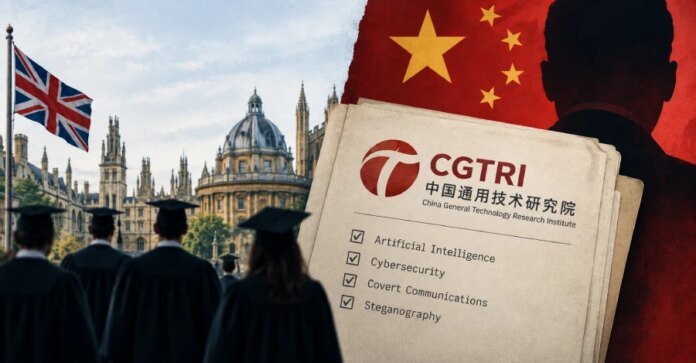
When Academia Meets Espionage: The Alarming Intersection of Research and National Security
What Happened
On September 30, 2026, MI5, the United Kingdom’s domestic intelligence agency, issued a stark "Security Service Espionage Alert." The alert revealed that over 100 academics in the UK had unwittingly assisted the Chinese government in advancing its intelligence capabilities through collaborations linked to the China General Technology Research Institute (CGTRI). The breach is not a typical data leak but a sophisticated web of academic inquiry and research output being exploited for espionage purposes. The alarming aspect of this situation is its scale—over a hundred individuals potentially implicated, each contributing to sensitive research that may enhance the capabilities of Beijing’s state security apparatus. While the exact data involved has not been disclosed, the implications for intellectual property and national security are significant.
Why This Breach Matters
This incident reflects a troubling trend wherein foreign entities, particularly state actors like China, leverage academic partnerships as a vector for intelligence gathering. The scale of academic infiltration outlined in MI5’s report marks a critical escalation in espionage tactics. State-sponsored espionage primarily centered around technology, research, and innovation poses a significant threat, mirroring tactics utilized in previous high-profile breaches that targeted sensitive governmental and corporate data (e.g., the SolarWinds and Microsoft Exchange attacks). Security teams within universities and companies need to recognize that traditional cybersecurity measures are insufficient—threat actors are evolving, operating in a domain where the knowledge economy collides with geopolitical tensions.
The Attack Chain: How It Likely Unfolded
Analyzing the potential attack vector linked to this incident reveals several concerning trends. Initial access likely came through academic collaboration, facilitated under the guise of legitimate research partnerships. These relationships may have included sharing proprietary knowledge, technological advancements, or intellectual property that, while appearing innocuous, could be deeply valuable to a foreign intelligence agency like the CGTRI. Lateral movement within the network most likely occurred through established academic communications—academic papers, conferences, and informal workshops, creating nodes of opportunity for data exfiltration. The specific mechanisms for data transfer, while not disclosed, could involve secure perimeter breaches, cloud storage misconfigurations, or direct access during collaborative research projects. Dwell time could be extensive, as many of these relationships may have been forged over years, providing ample opportunity for data siphoning.
Who Is Most at Risk
Industries at risk from this breach encompass academia and technology sectors, particularly institutions engaged in cutting-edge research and development. This includes universities, research institutions, and any organization that collaborates internationally on technology and innovation projects. Organizations in sectors handling sensitive data—chemical, science, and engineering—are especially vulnerable. The intersection with national security becomes pronounced when research output can translate into commercial or military applications benefiting foreign powers. Entities in these fields must engage in vigorous vetting of partnerships and collaborations to mitigate espionage risks.
Defensive Actions and Recommendations
Given the sophistication of this breach, organizations should adopt an immediate and comprehensive approach to mitigation.
Immediate Actions (24–72 hours):
- Implement a Risk Assessment: Conduct a rapid assessment of existing academic and international partnerships to identify those that may pose espionage risks.
- Enhance Access Controls: Strengthen access controls for sensitive research data utilizing role-based access protocols and multi-factor authentication to limit exposure.
Long-term Strategy (beyond 72 hours):
- Develop a Security Awareness Program: Educate faculty and students about the risks associated with international collaborations, focusing on signs of potential exploitation.
- Adopt a Threat Modeling Framework: Utilize frameworks like MITRE ATT&CK to chart potential attack paths and vulnerabilities related to academic and research environments.
- Establish Incident Response Protocols: Create a tailored incident response plan that encompasses not just traditional cybersecurity incidents but also potential breaches through collaborative work.
- Conduct Regular Security Audits: Engage external security professionals to perform audits and penetration testing, assessing the integrity of collaboration frameworks and data sharing practices.
Regulatory and Legal Exposure
Organizations engaging in international research may face significant legal implications, particularly under GDPR and other data protection regulations. If personal data relating to EU citizens is discovered to be at risk, organizations could face severe fines and increased scrutiny from regulatory bodies. Moreover, if sensitive military or technological research is compromised, this could lead to broader national security concerns, potentially triggering investigation from law enforcement agencies. Institutions should also review their compliance with export controls regarding technology transfer, as violations can lead to civil and criminal liabilities.
Full Circle Cyber Analyst Takeaway
The MI5 alert serves as a critical reminder that espionage extends beyond traditional confines—espionage is now intertwined with academia and research. This evolution necessitates an immediate reassessment of how organizations protect intellectual property amid global collaborations. The most urgent lesson here is that the quintessential barriers around cybersecurity must adapt to encompass a broader view of national security, making proactive measures in education and risk management essential for safeguarding sensitive research and data.

