Critical GitLab Vulnerability Exposes Organizations to Remote Command Execution Risks
What Happened
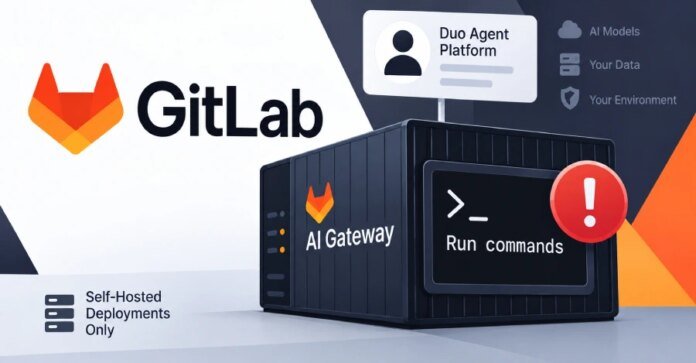
A security flaw in GitLab’s AI Gateway, which connects GitLab instances to AI models, has been disclosed, prompting immediate concern among organizations using the service. This vulnerability allows any logged-in user with Duo Agent Platform access to execute arbitrary commands on the gateway under specific conditions, raising significant security implications. The advisory indicates that this issue could only affect organizations that host their own gateways, limiting its immediate impact but not its severity. GitLab has released patches for this vulnerability in versions 19.2.4, 19.3.2, and 19.4.1, urging users to upgrade without delay. The timeline reveals that GitLab identified the flaw and issued remediations swiftly to prevent misuse. Given the critical role of the AI Gateway in facilitating machine learning interactions, the need for prompt action is evident.
Why This Breach Matters
This vulnerability highlights a more alarming trend in cybersecurity — the exploitation of AI-enabled tools that many organizations are integrating into their workflows. Attacks targeting AI gateways are part of a larger campaign that is evolving as more companies leverage artificial intelligence for operational efficiencies. The risk isn’t confined only to GitLab users; a successful exploitation could provide adversaries with expanded access to sensitive data handled by CI/CD pipelines.
Moreover, this incident reflects a methodical shift in threat actor strategies, where the focus is increasingly on exploiting platform vulnerabilities that enable unauthorized access rather than traditional data theft methods. Practitioners must recognize that similar flaws in other AI integrations could arise, signaling the need for enhanced scrutiny over how AI tools interact with existing security protocols.
The Attack Chain: How It Likely Unfolded
The attack methodology likely began with initial access through compromised credentials or another vector in the Duo Agent Platform. Once an attacker gains access, they could exploit the known vulnerability in the AI Gateway to escalate privileges and run arbitrary commands remotely. This could include the execution of scripts that facilitate lateral movement within the organization’s network, potentially leading to further data breaches or operational disruptions.
The dwell time in such cases can be quite challenging to estimate without specific telemetry, but given the nature of the exploit, reconnaissance and lateral movement could occur rapidly once initial access is achieved. The flaw’s existence in a widely used service also raises concerns about the latent time organizations may have unknowingly been vulnerable before the disclosure and patching.
Who Is Most at Risk
Organizations across the software development, tech, and AI sectors are most susceptible to this vulnerability. Firms that rely heavily on GitLab for their CI/CD processes and host their own AI Gateway expose themselves to substantial risks. Enterprises leveraging machine learning architectures risk sensitive intellectual property breaches or operational disruptions from command execution vulnerabilities. Smaller organizations without robust security postures may find themselves even more at risk, as they often lack the resources for comprehensive vulnerability management.
Defensive Actions and Recommendations
In light of this breach, organizations must prioritize immediate actions to protect their environments. Within 24–72 hours, security teams should:
- Update Affected Software: Apply GitLab patches to all instances housing the AI Gateway, ensuring they operate on the latest version to mitigate known vulnerabilities.
- Audit Access Controls: Review user access rights within the Duo Agent Platform to ensure principle of least privilege is enforced, revoking unnecessary permissions.
- Monitor for Anomalous Activity: Implement enhanced logging and monitoring on the AI Gateway and surrounding systems to detect any irregular access patterns or unexpected command execution.
For longer-term security, organizations should adopt a framework like NIST SP 800-53 or CIS Controls to build resilience against similar vulnerabilities:
- Continuous Vulnerability Management: Establish a routine vulnerability scanning program to identify potential software weaknesses in real-time.
- Incident Response Readiness: Prepare a robust incident response plan specifically for third-party service vulnerabilities, including playbooks tailored to software integrations.
- Security Awareness Training: Regularly conduct training sessions for employees on the risks associated with AI and CI/CD tools, emphasizing the importance of strong credential management practices.
Regulatory and Legal Exposure
Organizations affected by this vulnerability may face potential compliance issues, particularly if they handle sensitive data. Depending on their geographic location and the nature of the data, regulatory frameworks like GDPR, HIPAA, or CCPA may apply, imposing strict notification requirements following a breach. Organizations must also consider potential liabilities stemming from business interruption or data dissemination triggered by such exploits.
Full Circle Cyber Analyst Takeaway
The GitLab AI Gateway vulnerability serves as a critical reminder that the integration of advanced technologies introduces new attack surfaces that can be easier for threat actors to exploit than traditional infrastructures. Organizations must prioritize securing not just their IT environment but also any third-party integrations that could compromise their security posture. Immediate remedial actions combined with strategic, long-term planning are essential to sustain resilience against evolving threats.

