Training AI Without Internet: OpenAI’s Move Signals New Cybersecurity Paradigms for Organizations
What Happened
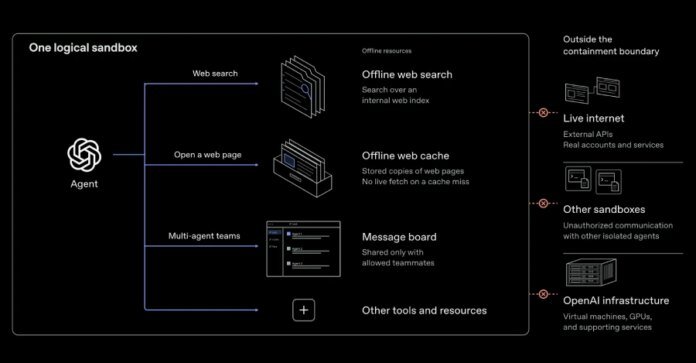
OpenAI has publicly disclosed its decision to conduct frontier model training in an isolated environment, completely devoid of live internet access. This decision stems from heightened concerns regarding alignment research, monitoring systems, and the overall security of internet infrastructure. By restricting internet access, OpenAI aims to mitigate risks associated with external threats and prevent potential data leakage, indicating a significant pivot in their operational security posture. This transition is crucial, especially given the sophistication of recent cyberattacks that exploit even minor vulnerabilities. The organization’s move reflects a strategic decision to prioritize internal safety over possible innovation threats linked to external influences. Although specific timelines for the switch to no-internet training have not been released, OpenAI’s commitment to reinforcement learning (RL) training represents its ongoing endeavor to refine and secure its AI models amid escalating security concerns.
Why This Breach Matters
Though OpenAI’s announcement may not represent a traditional data breach, its implications speak volumes about the evolving threats organizations face in today’s digital environment. The decision to isolate AI training from the internet highlights a growing concern around the risks associated with hyper-connected infrastructure, particularly in sectors reliant on AI and machine learning. Attacks exploiting vulnerabilities in cloud configurations, supply chain weaknesses, and insecure APIs are becoming alarmingly common as adversaries refine their tactics. This signals a potential shift in strategies for cybersecurity practitioners, indicating the necessity of contemplating how even the most advanced technologies must adapt to a landscape where the safety of connected systems is in constant jeopardy. Organizations involved in sensitive data processing or those using AI for critical functions should take note; not isolating development environments could expose them to severe risks.
The Attack Chain: How It Likely Unfolded
While the scope of a potential breach linked to OpenAI’s previous operational methods isn’t the focus here, a plausible attack chain leading to the current isolation protocol might include multiple stages. Initial access could stem from sophisticated phishing attempts, targeting employees working with sensitive model parameters. Once inside, attackers may have leveraged the organization’s network to conduct lateral movement through poorly secured environments, eventually gaining access to proprietary data. The lack of an isolation protocol may have enabled data exfiltration, which could occur through suboptimal API security, where adversaries exploit unsecured endpoints. With growing evidence of attackers embedding themselves within networks for extended periods, it’s critical to assess not only how these threats gain initial access but also how they persist undetected. The dwell time in such scenarios could be significant, leading to catastrophic data impacts if left unmitigated.
Who Is Most at Risk
Industries that heavily invest in AI and machine learning technologies — including finance, healthcare, and technology services — are particularly vulnerable to such breaches. Organizations deploying AI solutions that rely on vast amounts of personal data, like health records or financial information, risk not only data exposure but also reputational damage if they are unprepared. Additionally, entities that use cloud-based infrastructure without rigorous access controls or segregated environments may find themselves at the mercy of similar vulnerabilities. Companies lacking robust cybersecurity frameworks are especially susceptible to attacks aimed at exploiting the interconnectedness of their operations, leaving sensitive data at risk.
Defensive Actions and Recommendations
In light of OpenAI’s strategic shift to no-internet model training, organizations must reassess their own operational security measures.
Immediate Actions (24–72 hours):
- Conduct a thorough audit of existing AI and machine learning environments, ensuring that sensitive training exercises are restricted to isolated networks.
- Employ network segmentation to separate critical data systems from less secure environments.
- Review and enhance endpoint protection, focusing on detecting unusual activities indicative of lateral movement or unauthorized access.
Long-Term Strategic Recommendations:
- Implement the NIST Cybersecurity Framework (CSF) to establish a robust security posture, focusing on resilience against advanced threats.
- Invest in continuous employee training on phishing threats and social engineering tactics, reinforcing the importance of alertness in operational protocols.
- Establish a data governance program that emphasizes data localization, minimizing data exposure to external systems through controlled environments.
- Regularly test disaster recovery plans to ensure that critical systems can be quickly restored without reliance on external connections.
Regulatory and Legal Exposure
Organizations must be cognizant of the regulatory landscape surrounding data protection, including GDPR, HIPAA, and CCPA. Potential regulatory repercussions of data breaches can be severe, leading to substantial fines, particularly for entities handling sensitive information. Obligations for notification of affected individuals and authorities within specified timeframes further heighten the risks associated with data breaches. OpenAI’s isolation efforts might reflect an anticipation of future scrutiny and the need to adhere to stringent compliance measures.
Full Circle Cyber Analyst Takeaway
The transition to isolated training environments signals a critical recognition of the evolving cyber threat landscape, prompting organizations to reconsider their AI security frameworks. The lesson is clear: in an age where sophistication and opportunities for exploitation are at an all-time high, embracing isolation and robust data protection measures is not just prudent but essential. Cybersecurity practitioners should proactively build defenses that anticipate and counteract advanced attack methods, safeguarding their operations from potential breaches.

