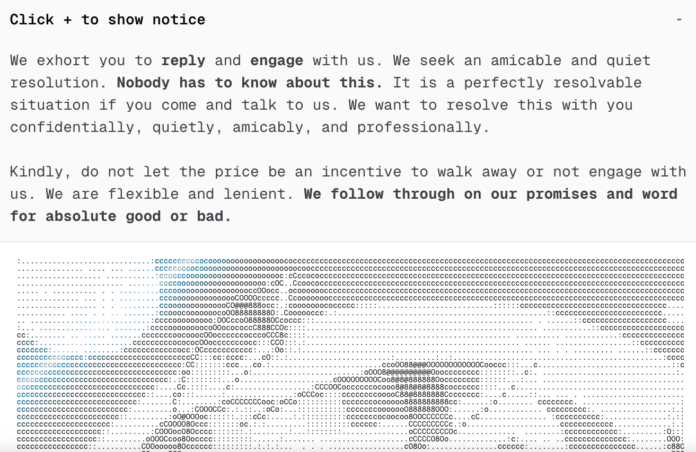
Title: ShinyHunters Hacking Group Exposes Deep Ties with Ransomware Negotiators, Signaling New Frontiers in Cyber Extortion
Attack Summary
The ShinyHunters hacking group, known for its extensive data extortion campaigns, has recently escalated its operations by breaching the FBI’s recruitment website, fbijobs.gov. This incident, suspected to be spearheaded by the group’s newly appointed leader "Rey," follows the arrests of prior members and indicates a shift towards more audacious targets — in this case, a federal agency. The breach reportedly resulted in the theft of highly sensitive information, including personal employee records. With claims of over $70 million in extortion demands fulfilled in 2026 alone, ShinyHunters appears emboldened and increasingly sophisticated. FBI investigations have revealed relationships between ShinyHunters and executives at ransomware negotiation firms, with some discussions reportedly aiding the hackers in leveraging their extortion tactics. It’s crucial to differentiate confirmed data, such as the breach’s details, from ongoing investigations into these relationships, which remain circumstantial but concerning.
Tactics, Techniques, and Procedures (TTPs)
Applying the MITRE ATT&CK framework, the ShinyHunters’ methodology showcases a range of sophisticated attack techniques:
- Initial Access (T1566 – Phishing): The attack on fbijobs.gov may have started through spear-phishing tactics aimed at FBI employees, enabling unauthorized access to sensitive systems.
- Exploitation (T1203 – Exploitation for Client Execution): Following initial access, exploitation of vulnerabilities within the website was likely leveraged to manipulate data flows and gain wider access to backend systems.
- Persistence (T1546 – Event Triggered Execution): The group may have established persistence mechanisms through compromised accounts or malicious scripts that trigger under specific conditions.
- Command and Control (C2) (T1071 – Application Layer Protocol): Reports hint at sophisticated C2 infrastructure, possibly utilizing common protocols cloaked within legitimate web traffic, complicating detection efforts.
- Exfiltration (T1041 – Exfiltration Over Command and Control Channel): The group’s operations suggest data was siphoned directly through the C2 channel, indicating a streamlined method of extracting sensitive information.
- Impact (T1486 – Data Encrypted for Impact): While this latest attack was primarily focused on data theft and extortion, the group’s history includes principles aimed at "destroying" or disabling targeted organizations.
ShinyHunters’ operational improvements and daring targets suggest a pivot toward more strategic and high-stakes operations rather than the scattergun approach often observed in earlier cybercrime ecosystems.
Threat Actor Context
Referred to as ShinyHunters, this threat group surfaced in 2019, initially composed of French cybercriminals but now reportedly controlled by a teenager from Jordan, "Rey." The group has shown a proclivity for targeting high-profile organizations across various industries, indicative of geopolitical motivations and heightened ambitions following the reduced activity of earlier members due to law enforcement crackdowns. ShinyHunters’ tactics are increasingly aligned with advanced persistent threats (APTs), bridging the gap between ransomware attacks and traditional espionage tactics. Their affiliations with ransomware negotiators, particularly those in the U.S. and Canada, hint at a troubling trend where actors may collaborate to maximize profit from cyber extortion, raising concerns regarding the effectiveness of response protocols.
Indicators of Compromise (IOCs)
Although specific IOCs directly associated with this incident have not been disclosed, security teams should be on the lookout for:
- Unusual traffic to URLs that could be linked to phishing schemes targeting FBI personnel or other potentially compromised entities.
- Indicators pointing towards the domains involved in negotiating extortion payments, particularly any mention of "Shinywire.com" or connections to known ransomware negotiators.
- Behavioral patterns characteristic of unauthorized data exfiltration, given the operational reliance on C2 channels.
Organizations would benefit from monitoring network traffic for signs of encrypted C2 communications, unexpected data exfiltration processes, and attempts to access sensitive employee systems or datasets.
Detection and Hunting Guidance
Security Operations Center (SOC) teams should consider employing the following strategies:
Log Analysis:
- Review web server logs for unusual access patterns, especially originating from anonymized proxies or tor exit nodes.
- Monitor vulnerabilities across web applications, focusing on authentication logs to detect brute-force attempts or unusual login locations.
Learning Queries:
- Implement SIEM queries focused on abnormal lateral movement between systems associated with the FBI’s infrastructure, identifying User Behavior Analytics (UBA) anomalies indicative of credential theft.
Endpoint Detection and Response (EDR):
- Use EDR solutions to track processes executing from suspicious locations, especially those tied to the execution of file transfers or C2 communications.
- Deploy telemetry to identify unusual behavioral activities around credential stores or user access logs.
- Network Anomalies:
- Detect unusual outbound connections to unknown domains or IPs, especially those using application layer protocols that resemble standard web traffic.
- Enforce alerts on data leaving the network that exceeds normal thresholds, particularly targeting sensitive datasets (i.e., employee records, classified information).
Mitigation Recommendations
Defensive strategies should include:
Strengthening Phishing Defenses:
- Implement multi-factor authentication (MFA) across all access tiers to critical systems.
- Conduct regular employee training programs focused on recognizing phishing attempts and suspicious communications.
Web Application Security Enhancements:
- Ensure web applications are updated and patched regularly to reduce known vulnerabilities that could be exploited by attackers.
Incident Response Readiness:
- Establish a robust incident response plan that includes protocols specifically designed for handling breaches involving sensitive governmental data.
- Collaborate with third-party breach response teams that do not incentivize ransom payments that can perpetuate the cycle of extortion.
- Monitoring and Logging Enhancements:
- Increase logging of authentication attempts and access to sensitive resources, ensuring they are monitored in real time for rapid identification of suspicious activities.
Full Circle Cyber Analyst Takeaway
The ShinyHunters incident epitomizes an alarming trend in cyber threats, where former criminal elements engage in serious enterprises, facilitating breaches against high-profile targets with impunity. The direct involvement of ransomware negotiators illustrates a complex web of complicity and raises questions about the efficacy of industry guidelines against ransomware payments. Organizations must remain vigilant, enhancing their security postures to include stronger detection mechanisms for data exfiltration and instituting stringent policies regarding ransom negotiations. This evolving landscape demands not only robust technical defenses but also strategic partnerships with trustworthy incident response firms to navigate potential threats effectively.

