Continuous Compliance Validation Introduces Critical Vulnerability Management Challenges
Vulnerability Overview
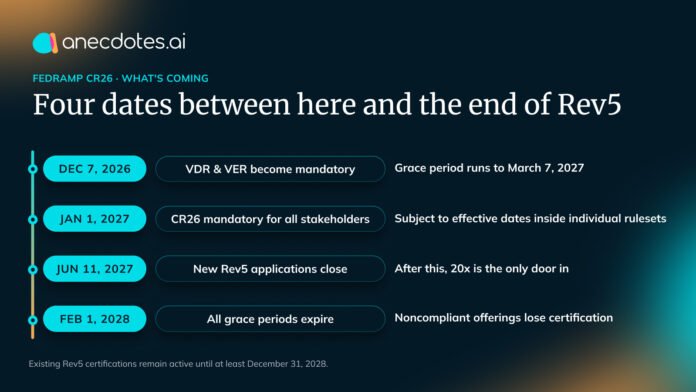
On December 7, 2023, new requirements from FedRAMP for Vulnerability Detection and Response (VDR) as well as Vulnerability and Exposure Reporting (VER) will profoundly impact vulnerability management practices for cloud service providers (CSPs). These new requirements shift the focus towards continuous scanning and rapid remediation timelines, mandating a more dynamic attack surface management while integrating automated compliance validation mechanisms. The core aspects of these requirements increase operational overhead amidst a backdrop of cybersecurity urgency, necessitating agile and informed decision-making. While FedRAMP aims to enhance security compliance, failure to adapt could expose organizations to heightened risk according to the Risk Management Framework (RMF). Owing to the enhanced demand for real-time evidence of vulnerability management activities, organizations must embrace a proactive approach to configurations and processes.
Technical Deep Dive
The FedRAMP VDR focuses on constant and automated vulnerability scanning of cloud environments, fundamentally altering how vulnerabilities are identified, prioritized, and remediated. The shift from periodic scanning to continuous assessment means that CSPs must employ technologies that provide real-time visibility into vulnerabilities across their services while ensuring those vulnerabilities—whether they stem from the application layer or the underlying infrastructure—are promptly addressed.
This might involve deploying advanced scanning tools capable of utilizing Application Programming Interfaces (APIs), which aggregate data from multiple layers and expose vulnerabilities in shared resources. Attackers leveraging these vulnerabilities could gain entry into secure environments or escalate privileges, potentially leading to full system compromise. The necessary prerequisites for exploitation are significantly reduced; thus, simply having access to services using default configurations or inadequate access controls can facilitate malicious exploitation. Establishing sound Continuous Integration/Continuous Deployment (CI/CD) practices becomes imperative to mitigate vulnerabilities pointed out by the new VDR requirements before they can be translated into an actual attack on the cloud services. According to the Common Weakness Enumeration (CWE) classification, these vulnerabilities often fall under CWEs such as improper input validation (CWE-20) or reliance on insecure default configurations (CWE-752).
Exploitation Status and Threat Context
As organizations begin to implement the new FedRAMP requirements, a stark increase in the attack surface can be anticipated, particularly from opportunistic attackers who exploit weak or misconfigured cloud services. With reliance on automated vulnerability disclosures, public proof-of-concept (PoC) code is likely to emerge as attackers look to demonstrate the newly identified weaknesses. While FedRAMP has not yet reported direct evidence of widespread exploitation of these specific vulnerabilities, it is crucial for organizations to understand that the consciousness surrounding them is likely to evolve rapidly as adversaries recognize unpatched systems as easy targets.
Organizations that fail to address vulnerabilities rapidly will be exposed to potential breaches, particularly since cybercriminals and hacktivist groups often resort to scanning for and exploiting known vulnerabilities following software updates. Therefore, organizations given the new compliance deadlines need a realistic exploitation window—a matter of weeks or even days after release of vulnerability guidance, meaning unpatched systems will be at greater risk, with the likelihood of sophisticated actor involvement present.
Affected Systems and Exposure Assessment
Organizations operating under the FedRAMP framework, particularly those launching new cloud offerings or employing legacy systems without regular vulnerability assessments, are most vulnerable as they rollout under the stringent guidelines for VDR and VER. Services that expose public-facing endpoints, utilize default configurations, or feature weak authentication mechanisms are especially at risk. Deployment patterns that prioritize rapid rollout without thorough vulnerability checks increase exposure significantly. Open-source scanning tools can be utilized to identify the scope of affected deployments, while assets identified through platforms like Shodan could reveal instances where organizations are unprepared for the new validation requirements.
Patch and Mitigation Guidance
To comply with FedRAMP’s enhanced vulnerability management expectations, organizations should engage with their compliance teams to ensure readiness before the December 7 deadline. Immediate actions include implementing comprehensive vulnerability scanning tools capable of meeting real-time monitoring demands. For those having limited capability to remediate vulnerabilities swiftly, extending the testing phase in CI/CD pipelines and incorporating security shift-left strategies can greatly help.
Specific patches from vendors may not exist due to these requirements being more procedural rather than exposing software vulnerabilities directly. Therefore, adjustments should include tightening access controls, applying firewall rules to limit exposure of unnecessary services, and enforcing much tighter monitoring of logs for suspicious activities. This multifaceted approach ensures lowered risk and improves compliance posture iteratively. The establishment of a formalized incident response plan that outlines processes to address identified vulnerabilities will further enable rapid mitigation when needed.
Detection Guidance
Organizations should implement logging and monitoring of automated scanning processes alongside an alert system that emphasizes anomalous behavior linked to vulnerability exposures. Relevant log sources include web application firewalls (WAFs), intrusion detection/protection systems (IDS/IPS), and native CSP logging capabilities that track changes in system and application configurations. Behavioral indicators such as sudden surges in outbound traffic or repeated failed authentication attempts should be closely monitored.
Full Circle Cyber Analyst Takeaway
Given the urgency and the potential impact of the new FedRAMP VDR and VER requirements, immediate action is essential. Teams should prioritize these changes as a critical patching cycle rather than waiting for regular scheduled updates. The dynamic nature of the threat landscape and the increased scrutiny on CSPs necessitate rapid adaptation to ensure compliance resilience and reduce risk exposure to vulnerabilities being exploited in the wild. Ignoring these changes could lead to heightened vulnerability against increasingly efficient and opportunistic cyber attacks.

