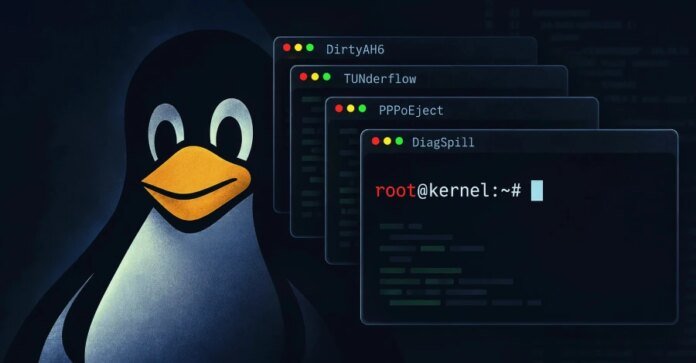
Exploit Code Release Sparks Urgent Security Response for Linux Systems
What Happened
Recent disclosures from a security researcher have revealed working exploit code for four significant vulnerabilities within the Linux kernel, each granting local users root access—the highest privilege level on affected systems. The vulnerabilities, which affect multiple distributions of the Linux operating system, were patched by kernel maintainers in the past weeks, meaning that systems running up-to-date kernels should be secure from these specific threats. However, the exploit code’s public release poses a serious risk to machines that have not yet applied the updates, potentially exposing them to unauthorized access and control. The vulnerabilities underscore the importance of timely updates and robust patch management, particularly for environments that rely heavily on Linux operating systems for server and application hosting.
Why This Breach Matters
The dissemination of exploit code for Linux kernel vulnerabilities signals a concerning trend in how vulnerabilities can be weaponized post-disclosure. This incident highlights a critical vulnerability management scenario often seen in Windows systems but now increasingly impacting Linux environments. Given the immense use of Linux in cloud services, embedded systems, and enterprise applications, these specific vulnerabilities can serve as initial footholds for attackers probing for further weaknesses. Comparatively, this echoes incidents like the 2021 vulnerabilities in the Log4j library; exploitation models in open-source software environments often magnify risks due to the widespread adoption and complex dependency chains. Security teams must recognize the serious implications of this release, especially if their systems have not been maintained with up-to-date patches.
The Attack Chain: How It Likely Unfolded
While specifics of the exploitation methodology remain less clear following the public disclosure, we can infer a plausible attack sequence based on typical exploitation patterns for local privilege escalation vulnerabilities. Initial access may occur via social engineering or a malicious local application that executes code leveraging these vulnerabilities. Once inside, an attacker could potentially employ techniques such as memory corruption to exploit the vulnerabilities, escalating privileges to root levels and gaining full control over the machine. Dwell time in such scenarios could vary widely but is often prolonged when attackers use root access to further entrench their position by installing backdoors or conducting reconnaissance to map the environment for additional systems to compromise. As the details regarding the exact method of the exploit are still unfolding, organizations should remain vigilant for anomalous activities indicative of unauthorized access.
Who Is Most at Risk
Organizations in sectors heavily reliant on Linux infrastructure are particularly exposed to this type of breach. Technology firms, cloud service providers, financial institutions, and any business utilizing Linux-based servers are at increased risk, especially when using outdated kernel versions. Additionally, organizations that have misconfigured user permissions or have internal processes that allow non-administrative users to run critical applications may inadvertently empower a local threat actor’s ability to exploit these vulnerabilities. With broader attack surfaces, smaller enterprises adopting Linux for cost-effective solutions without robust security postures are also prime targets whose systems could be manipulated if the patching remains neglected.
Defensive Actions and Recommendations
To mitigate risks associated with these vulnerabilities, security teams should implement prioritized response measures that encompass both immediate and long-term strategies. In the critical 24 to 72-hour window post-disclosure, organizations should:
Inventory and Patch: Conduct a comprehensive audit of all Linux systems to identify the current kernel versions in use. Immediately prioritize patching systems to the latest stable kernel versions as issued by maintainers.
Apply Least Privilege Principles: Ensure that user permissions are strictly managed and that non-administrative users have no ability to execute tasks requiring elevated privileges.
Enhance Monitoring: Activate or increase logging and monitoring for suspicious activities on Linux systems, focusing on privilege escalation attempts and unusual user behavior. Using security information and event management (SIEM) solutions can aid in quickly identifying malicious activities.
Implement Advanced Threat Detection: Consider deploying endpoint detection and response (EDR) solutions that can provide real-time alerts and automated responses to potential exploitation attempts.
- Develop Patch Management Protocols: Establish clear internal timelines and processes for testing and applying kernel patches, with a focus on staying updated with both security alerts and performance-related updates from kernel maintainers.
Long-term, organizations should adopt frameworks such as NIST Cybersecurity Framework, CIS, or ISO 27001 to guide overall security postures with structured risk assessments and security governance that includes robust patch management as a critical focus area.
Regulatory and Legal Exposure
Depending on the jurisdiction and the nature of data handled, organizations may face compliance implications stemming from this breach. Potential regulations include GDPR, CCPA, or industry-specific laws like HIPAA, which mandate the protection of sensitive data. With the unauthorized access enabled by these vulnerabilities, organizations may find themselves liable for data breaches if sensitive customer information is compromised. Regulatory bodies might enforce notification laws requiring organizations to disclose breaches to affected individuals and relevant authorities, emphasizing the need for swift incident response measures should systems be compromised.
Full Circle Cyber Analyst Takeaway
This incident starkly illustrates that the security of Linux systems hinges on proactive patch management and privilege control. Organizations must be vigilant in promptly applying updates and enforcing least privilege access to develop resilient defenses against potential exploits now and in the future. The attack surface is only expanding; security teams must rise to the challenge.

